
Overview:
Working in partnership with Southend-on-Sea City Council, Marlborough Highways delivered a major project to stabilise the cliffs at Belton Way East in Leigh-on-Sea. As well as carrying out repairs to a retaining wall, which included replacing a significant volume of material, the expert team reduced the slope gradient and improved the space at the top of the feature. The works have created a safe, attractive, and welcoming location for the Southend-on-Sea community to enjoy.


The Challenge
Belton Way in Leigh-on-Sea is a road with a distinctive topography that slopes down from Marine Parade towards Leigh-on-Sea train station and the estuary of the River Thames. The road is positioned on the hillside above the railway line, offering elevated views of the waterfront and surrounding areas. About a mile long, it is split into Belton Way East and Belton Way West and runs through the Belton Hills Nature Reserve. Providing a vital connection for pedestrians and vehicle users, the cliff frontages there are predominantly formed of London Clay and have a history of slope instability.
Following some initial works at the location in 2020, and more recent works along Belton Way West, Marlborough was tasked with replacing the retaining wall at the top of Belton Way East, with the slope there starting to rotate. Identified as an area of risk, and exacerbated by heavy rains, a decision was made to cordon off the area, with priority given to renewed stabilisation works. A short-term solution was required to ensure the immediate safety of road users, while maintaining continued public access. Furthermore, a long-term strategy was needed that would address the underlying geological issues and prevent future slope failures.
The Solution
Working in partnership with an engineering consultancy, an innovative solution was devised to address the slope instability and ensure long-term safety. The project began with the excavation of the site and the removal of existing materials to stabilise the hillside. The slope gradient was reduced to a safer 1:3 ratio, and around 100 metres of gabion baskets were installed to replace the failing retaining wall. These high-quality, durable structures not only reinforce the slope but also allow for better drainage, reducing the risk of future erosion. Specialist machinery, including an 18.5-metre-reach excavator, was used to handle the demanding terrain, and careful traffic management ensured that vehicles could keep moving while the works were completed.
At the slope summit, topsoil was distributed, and footways were repositioned to improve access and safety. The area was further enhanced by reconditioning 10 memorial benches and carrying out minor but essential repairs to the existing steps and handrails. High-quality concrete and timber edging was installed along the footways, with smooth asphalt finishes applied for a robust, clean surface. These improvements not only enhance safety for pedestrians but also improve the overall aesthetic and functionality of the location.
The result is a secure and well-maintained area where the community can feel confident in the stability of the landscape, while enjoying the space for recreation and relaxation.
Fact File
Client Southend-on-Sea City Council
Date July – August 2024
Duration 8 weeks
Project
- Excavation of site and removal of 600 cubic metres of material
- Reduced slope gradient
- Replaced existing retaining wall with gabion baskets
- Distributed topsoil
- Re-positioned footways
- Reconditioned 10 memorial benches
- Minor works to steps and handrails
- Traffic Management services
Team
- 1 full time Project Manager
- 1 Supervisor
- 1 Machine operator
- 4 Marlborough operatives across all trades
Client savings
- All the operatives involved in the works were residents of the area, bringing local employment to the community.
- The plant machinery was sourced from a local company, contributing to the area’s economy.
Quote from client
“Southend-on-Sea is blessed with wonderful cliffs across the seafront and into Leigh-on-Sea. However, managing cliff slip is essential to keep the area safe and it is always taken seriously. Without this work that has taken place in recent years and more recently, any further movement could potentially have had an impact on surrounding homes, roads and Network Rail assets too. It is great to see that has been finished and delivered to such a high standard by our contractor Marlborough.”
Cllr Lydia Hyde, Cabinet Member for Climate, Environment and Waste, Southend-on-Sea City Council
















“One of the things I value most is their very collaborative and transparent team culture. It makes a big difference to have a contractor that wants to work closely with us and is supportive and responsive. With Marlborough, I get a team who are attentive, work collaboratively and honestly with me and don’t lose focus on delivering first class communications and compliance.”
“From the design stage, Marlborough has been fundamental in delivering the Broad Lane Square improvements scheme. During the works, not only did the team manage to keep to the programme, but they went the extra mile to ensure attention to detail and came up with innovative solutions to address issues encountered on site. My thanks on behalf of Haringey goes out to Marlborough for their dedication to deliver.”
“Working alongside our Term Service Contractor Marlborough Highways, we successfully completed renovations to the Crowstone Footbridge. The designs were provided by Marlborough, and the work was unique. The scheme was completed to budget and ahead of its programme duration.”
“I would like to thank you and your team for your efforts, the Marlborough crews were professional, courteous, and hard working all day and ensured the event went without a hitch. You and the team were a credit to the company, demonstrating commitment and support to the London Borough of Barking and Dagenham.”
“I just wanted to say what a pleasure it has been to work with Marlborough Highways over the last six months. The quality of work is superb, and there has been some excellent collaboration between Milestone and Marlborough to complete, what at times, has been quite a challenging scheme. I hope to work with Marlborough on another project in the near future.”
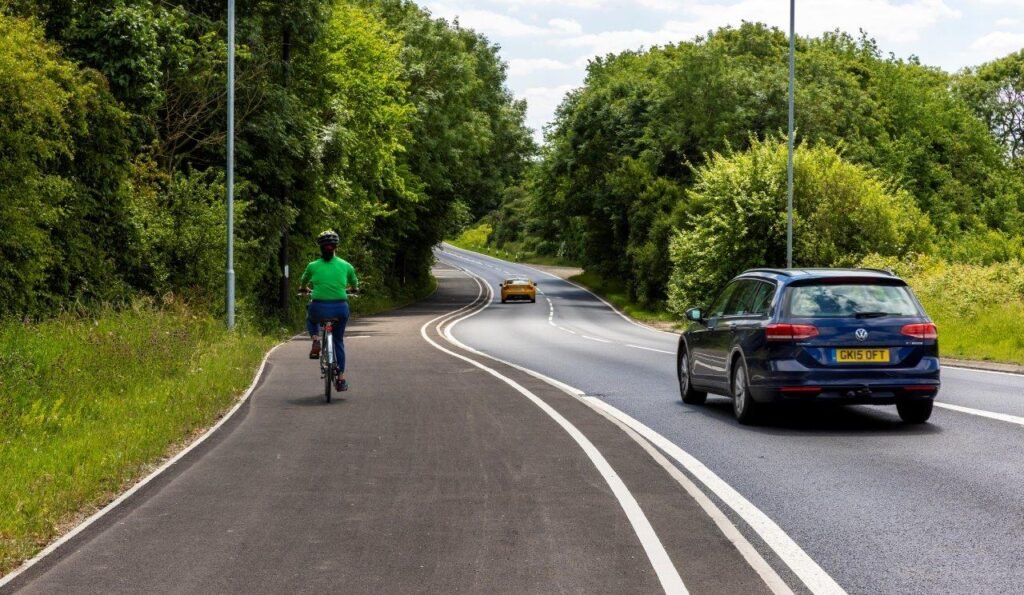
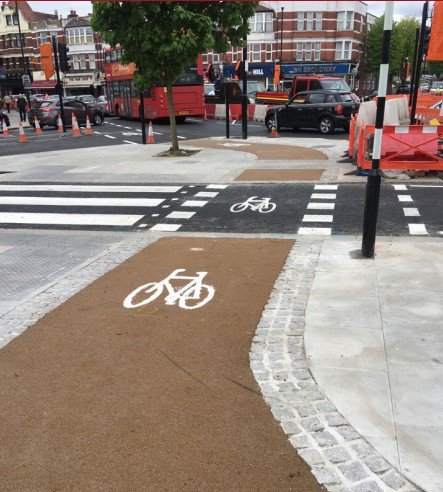
“Marlborough worked with us in constructing a 1.3km cycle track. There were a number of technical difficulties to overcome, and their gifted foreman worked to propose some innovative solutions to the challenges we faced. The result is a facility that the locals are proud of, providing walkers and cyclists with alternative access to the hospital and nearby school. The scheme was a lot of hard work, but well worth it.”
“Marlborough attracts people who take care and have pride in their work. Several gangs of Operatives worked tirelessly for six months to reconstruct drainage networks, lay more than 3km of high quality bespoke granite kerbs and granite channels blocks to ensure positive drainage. The technical compliance, attention to detail and level of quality finish along the entire carriageway was exceptional”.
“We saw huge benefits in appointing Marlborough as our full service contractor and we’re impressed – they’ve delivered consistent high quality service and superior quality control across every project. Marlborough, provide us with a ‘one-stop’ shop solution – we get the same quality of service and better control across all aspects of the project.”
Please see our privacy notice for more information on how Marlborough Highways Ltd take care of your details.