
Overview:
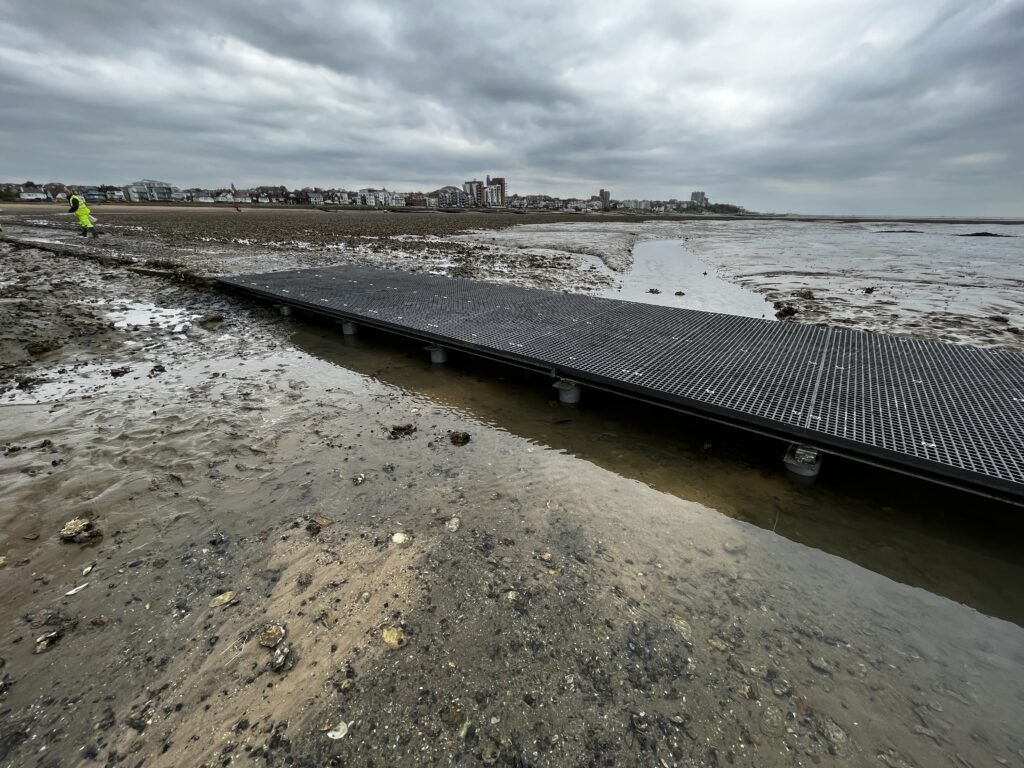
Southend-on-Sea City Council commissioned Marlborough Highways to construct a 28 metre accessible boardwalk on Chalkwell Beach in Westcliff-on-Sea. Part of the European Regional Development Fund’s Sustainable and Resilient Coastal Cities (SARCC) programme, durable materials were used, and innovative building techniques were deployed, resulting in a robust and practical walkway. The new design is attractive and in fitting with the local aesthetic, and stands as an accessible feature, ensuring that every member of the community can enjoy the beach. Marlborough’s commitment went beyond just construction, with their team also creating a bug hotel for the site and contributing to a planting initiative.


The Challenge
Chalkwell Beach is a popular location for walkers and swimmers, overlooking the Thames Estuary. Attracting locals and tourists alike, the sandy beach and nearby coastal channels are a haven for nesting birds and marine wildlife. Southend-on-Sea City Council recognised two issues; firstly, the beach was inaccessible to those with mobility challenges, and secondly, Chalkwell was increasingly at risk from coastal erosion and seasonal flooding.
A cost-effective, long-term solution was needed, with a scheme that would provide safe beach access for all, while protecting the environment from the elements. The Council’s answer was to commission a new timber boardwalk and a ‘climate resilient garden’ that would consist of strategically placed vegetation, designed to withstand harsh weather events caused by climate change.
Marlborough was asked to deliver the boardwalk, with expert planning and design required, to ensure it would fulfil its primary function, while complementing the local environment. It was vital that works were conducted to time and to a strict budget, with the need to keep disruption to a minimum.
The Solution
Working with the engineering consultancy Haydn Evans, Marlborough adapted and enhanced the Council’s design plans to create a 28 metre-long, 2.5-metre-wide boardwalk, with a turning circle feature at its end. The project began with the clearing of the construction site before Marlborough drove heavy duty timber piles deep into the surface. Horizontal stringers were attached to the piles, acting as the primary support for the decking. Ekki timber boards were then fitted, with the hardwood material offering exceptional resistance to salt water, sand and extreme weather conditions.
With safety in mind, the boardwalk was built at ground level and includes raised edges. Furthermore, the feature was constructed with a non-slip protection treatment, with every board fitted with two strips to prevent falls. The result is a smooth and sturdy surface that offers wheelchair users easy access from the existing footpath to the centre of the beach.
By conducting winter works over a three-week period during the tourism low season, disruption to visitors and to local businesses that rely on holidaymakers was kept to a minimum. And by opting to use light-weight machinery and hand tools, rather than bringing heavy machinery on to the beach, most of the area could remain open to the public throughout the period of works.
Despite the cold, wet and windy weather, and tidal times restricting Marlborough’s hours of operations, the scheme was completed to schedule and to the highest quality. The completed boardwalk has been a resounding success with residents and visitors, with the thoughtful design and accessible features making it a popular addition to the seafront.
Fact File
Client Southend-on-Sea City Council
Date December 2023 – January 2024
Duration 3 weeks
Project
- Excavation of beach site
- Installation of timber piles
- Creation of 28 metre long boardwalk at ground level
- Construction of a circle at the feature’s end
- Built with raised edges
Team
- 1 x full time Project Manager
- 1 x Supervisor
- 3 x Marlborough Operatives across all trades
Client savings
- Two of the three Marlborough operatives were residents of the area, bringing local employment to the community.
SARCC
The Sustainable and Resilient Coastal Cities scheme is a European project with financial support from the European Regional Development fund. Its objective is to encourage the use of nature-based solutions (NBS) in coastal management strategy, particularly in urban areas threatened by the rise in sea-levels. Southend-on-Sea is one of seven destinations in Europe to benefit from the initiative, with Southend-on-Sea City Council delivering five innovative coastal projects as part of the programme.
Volunteering day
In February 2024, on completion of the boardwalk project, Marlborough and Southend-on-Sea City Council held a planting day as part of efforts to create a climate resilient garden at Chalkwell Beach. Volunteers from both organisations strategically planted a variety of foliage around the new boardwalk, with grasses and native mature species chosen for their salt-tolerant and weather resistant qualities. Anna Firth, the MP for Southend West, joined the group, with the meaningful initiative contributing to greater biodiversity.
Bug hotel
Using scrap timber from the scheme, Marlborough’s engineers built a bug hotel, which has been installed at the site. Measuring approximately one metre high, the pint-sized accommodation will attract spiders, woodlice, beetles, and more, with the possibility of bumblebees, ladybirds and butterflies visiting in the warmer months. By providing a habitat for a wide range of insects, the bug hotel promotes biodiversity and pollination, offering nature a helping hand.













“One of the things I value most is their very collaborative and transparent team culture. It makes a big difference to have a contractor that wants to work closely with us and is supportive and responsive. With Marlborough, I get a team who are attentive, work collaboratively and honestly with me and don’t lose focus on delivering first class communications and compliance.”
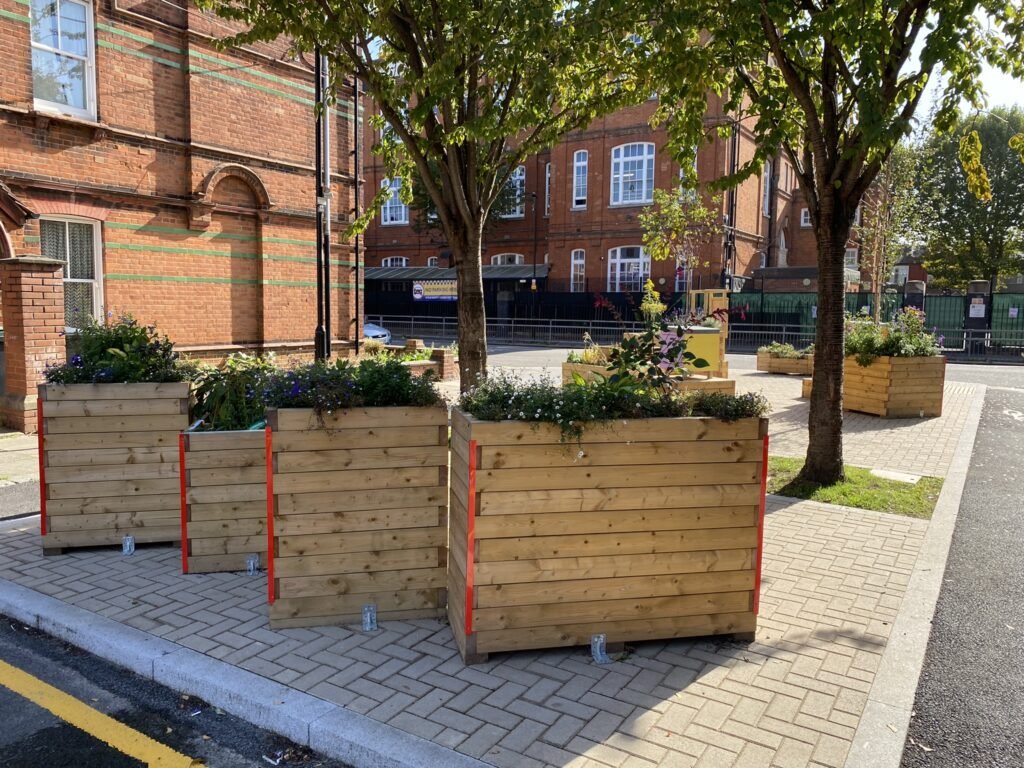
“From the design stage, Marlborough has been fundamental in delivering the Broad Lane Square improvements scheme. During the works, not only did the team manage to keep to the programme, but they went the extra mile to ensure attention to detail and came up with innovative solutions to address issues encountered on site. My thanks on behalf of Haringey goes out to Marlborough for their dedication to deliver.”
“Working alongside our Term Service Contractor Marlborough Highways, we successfully completed renovations to the Crowstone Footbridge. The designs were provided by Marlborough, and the work was unique. The scheme was completed to budget and ahead of its programme duration.”
“I would like to thank you and your team for your efforts, the Marlborough crews were professional, courteous, and hard working all day and ensured the event went without a hitch. You and the team were a credit to the company, demonstrating commitment and support to the London Borough of Barking and Dagenham.”
“I just wanted to say what a pleasure it has been to work with Marlborough Highways over the last six months. The quality of work is superb, and there has been some excellent collaboration between Milestone and Marlborough to complete, what at times, has been quite a challenging scheme. I hope to work with Marlborough on another project in the near future.”
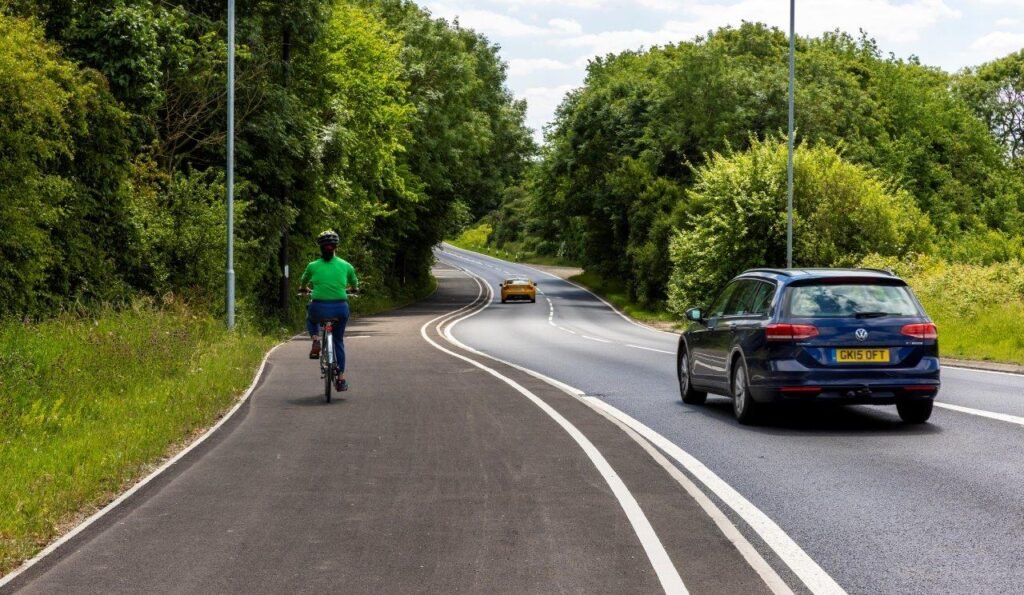
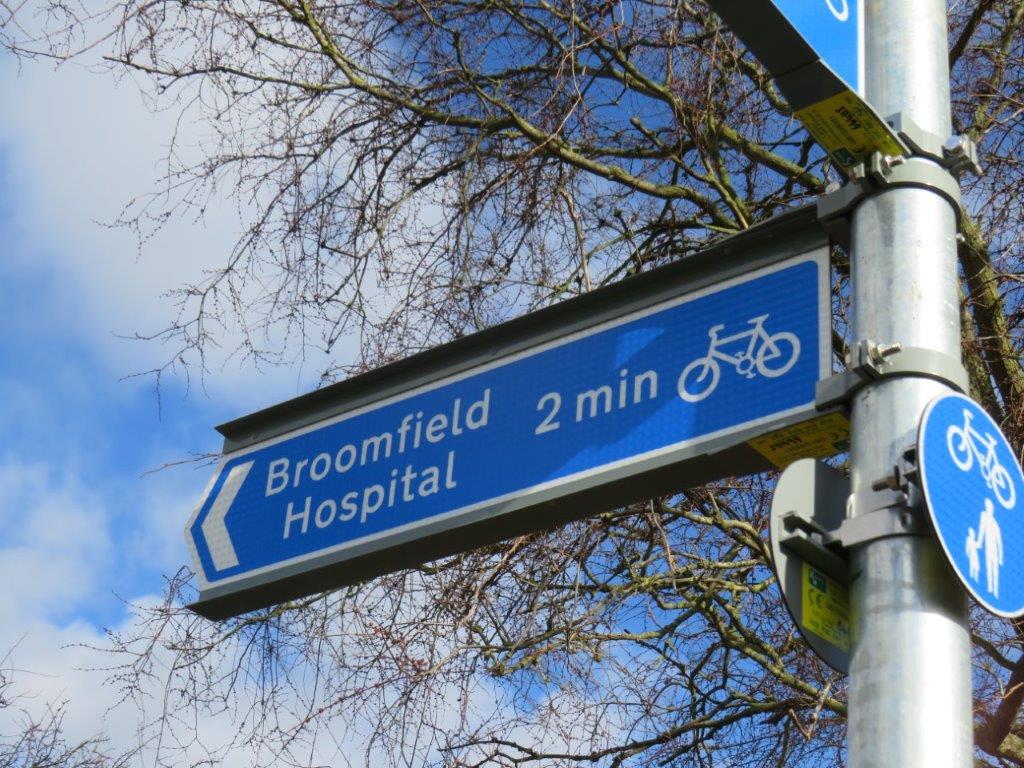
“Marlborough worked with us in constructing a 1.3km cycle track. There were a number of technical difficulties to overcome, and their gifted foreman worked to propose some innovative solutions to the challenges we faced. The result is a facility that the locals are proud of, providing walkers and cyclists with alternative access to the hospital and nearby school. The scheme was a lot of hard work, but well worth it.”
“Marlborough attracts people who take care and have pride in their work. Several gangs of Operatives worked tirelessly for six months to reconstruct drainage networks, lay more than 3km of high quality bespoke granite kerbs and granite channels blocks to ensure positive drainage. The technical compliance, attention to detail and level of quality finish along the entire carriageway was exceptional”.
“We saw huge benefits in appointing Marlborough as our full service contractor and we’re impressed – they’ve delivered consistent high quality service and superior quality control across every project. Marlborough, provide us with a ‘one-stop’ shop solution – we get the same quality of service and better control across all aspects of the project.”
Please see our privacy notice for more information on how Marlborough Highways Ltd take care of your details.